Coordinating Layered Promotional Triggers with Evolving Match Dynamics Across Soccer Fixtures and Court Competitions Through Integrated Mobile Interfaces
Logan Reed · Sep 23, 2026
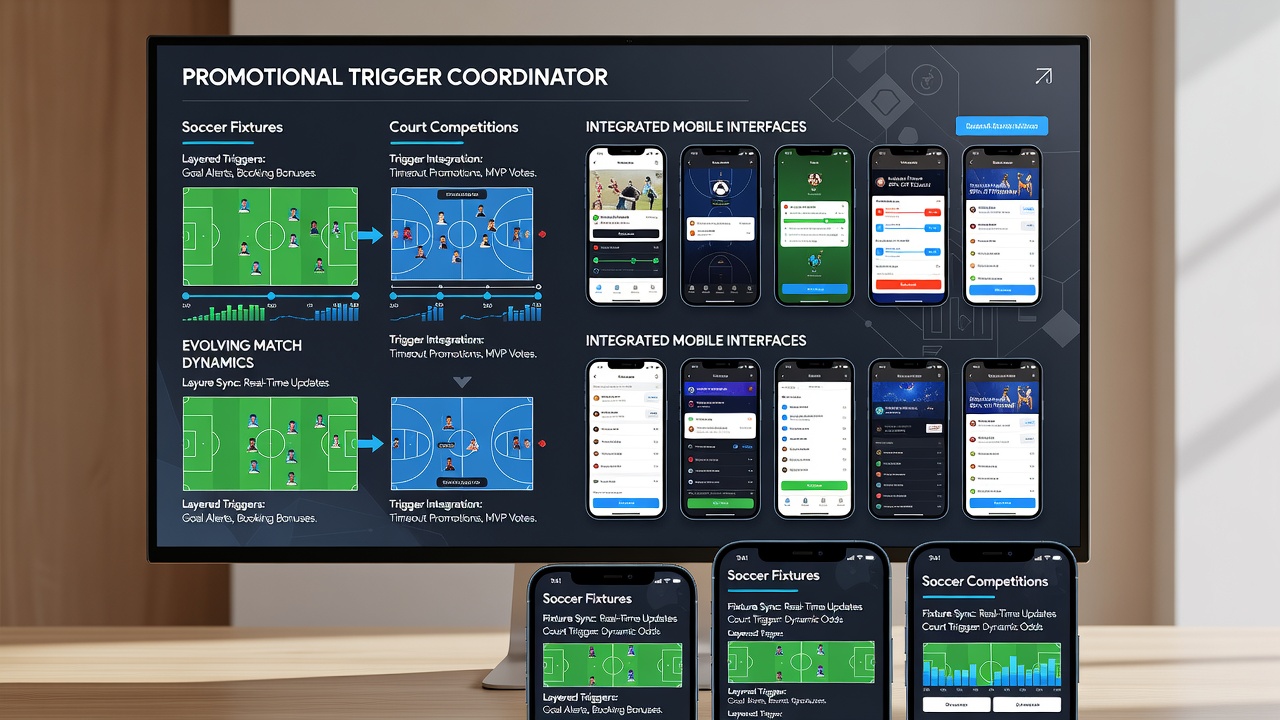
Coordinating Layered Promotional Triggers with Evolving Match Dynamics Across Soccer Fixtures and Court Competitions Through Integrated Mobile Interfaces
Integrated mobile interfaces now connect promotional mechanisms directly to live performance indicators in soccer matches and court-based events such as tennis or basketball, allowing systems to adjust offers based on shifting scorelines, possession statistics, and time remaining. These platforms pull data streams from official league feeds and sensor networks, then route the information through application programming interfaces that trigger predefined reward sequences at specific thresholds. Observers note that the coordination relies on synchronized timestamps between match events and user session logs, which prevents delays that once disrupted real-time adjustments.
Core Components of Mobile Interface Architecture
Modern systems combine geolocation services, push notification frameworks, and dynamic content delivery networks to maintain continuous connections during fixtures. Data packets carrying match variables travel from venue servers to cloud processors, where algorithms evaluate conditions against stored trigger rules before pushing updated interface elements to individual devices. Research indicates that latency reductions achieved through edge computing nodes have enabled sub-second responses across multiple time zones, a development tracked in reports from the American Gaming Association.
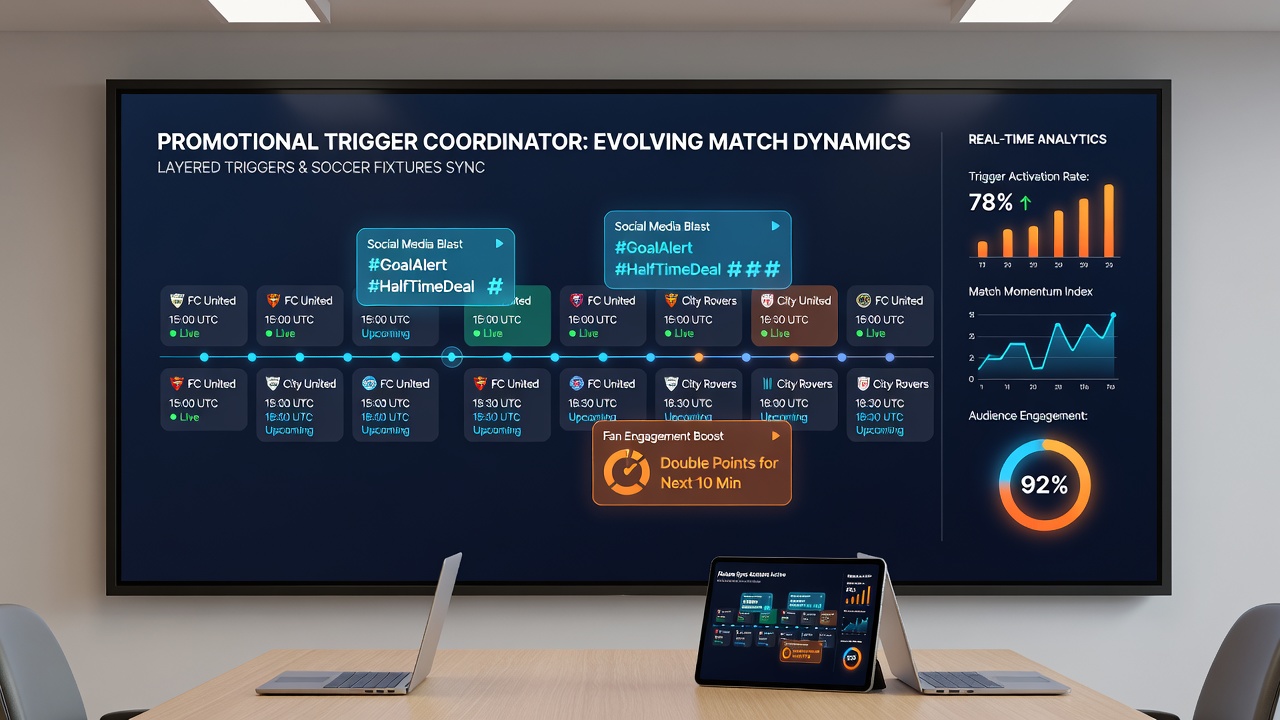
Layered triggers operate in sequence rather than isolation, so an initial offer tied to a goal in soccer can activate a secondary condition based on subsequent corner counts or player substitutions. Court competitions follow similar patterns, with triggers responding to set completions or service breaks in tennis, or foul accumulations in basketball. The architecture maintains separate rule sets for each sport while sharing the same notification backbone, which reduces redundant code and supports simultaneous handling of fixtures from different regions.
Application in Soccer Fixtures
Soccer matches generate high volumes of variable events per ninety-minute period, and mobile platforms map these to promotional layers through predefined decision trees. When a team reaches a set number of shots on target, the system evaluates user eligibility against prior engagement metrics before releasing the next tier of rewards. Figures from industry monitoring services show that adoption of these synchronized interfaces increased during the 2025-2026 season, with developers preparing additional modules ahead of expanded European club competitions scheduled for September 2026.
Fixture schedules influence trigger timing because overlapping matches require the interface to prioritize streams without dropping active sessions. Engineers achieve this through weighted queuing that favors events with higher user density, while still preserving accuracy for lower-attention games. Those who have examined the backend logs report that error rates drop when separate microservices handle soccer-specific metrics versus general user authentication.
Adaptations for Court Competitions
Tennis and basketball present shorter, more segmented action windows compared with soccer, which changes how layered triggers activate. A service break in tennis can immediately initiate a secondary condition tied to the next game, whereas basketball foul trouble often links to end-of-quarter adjustments. Mobile interfaces accommodate these differences by loading sport-specific rule libraries at the start of each session, then swapping context when users switch between live streams.
Studies compiled by the Australian Gambling Research Centre document how real-time data integration affects engagement patterns across these formats. The research highlights that interfaces capable of rapid rule switching maintain higher session continuity when users follow multiple court events in parallel. Developers achieve this continuity through persistent WebSocket connections that carry both match telemetry and promotional state without requiring page reloads.
Technical Synchronization and Data Handling
Successful coordination depends on timestamp alignment between official match data and the mobile application's internal clock. Any drift triggers fallback protocols that pause new layers until synchronization recovers. Systems also incorporate checksum verification on incoming event packets to filter corrupted data before it reaches the trigger engine. Observers have recorded that these verification steps add minimal overhead yet prevent cascading mismatches during high-velocity periods such as injury time or tiebreaks.
Security protocols wrap each data exchange in encrypted channels, and access tokens rotate at intervals determined by session activity levels. Regulatory frameworks in multiple jurisdictions require audit trails of every trigger activation, which platforms generate automatically through logging services that tag each event with match identifier, user segment, and outcome status.
Conclusion
Coordinated mobile systems now link promotional layers to live match variables across soccer and court competitions through standardized data pathways and adaptive rule engines. Continued refinement of synchronization methods and sport-specific libraries supports expanding fixture calendars, including those planned for September 2026, while maintaining compliance with regional data and operational requirements.